
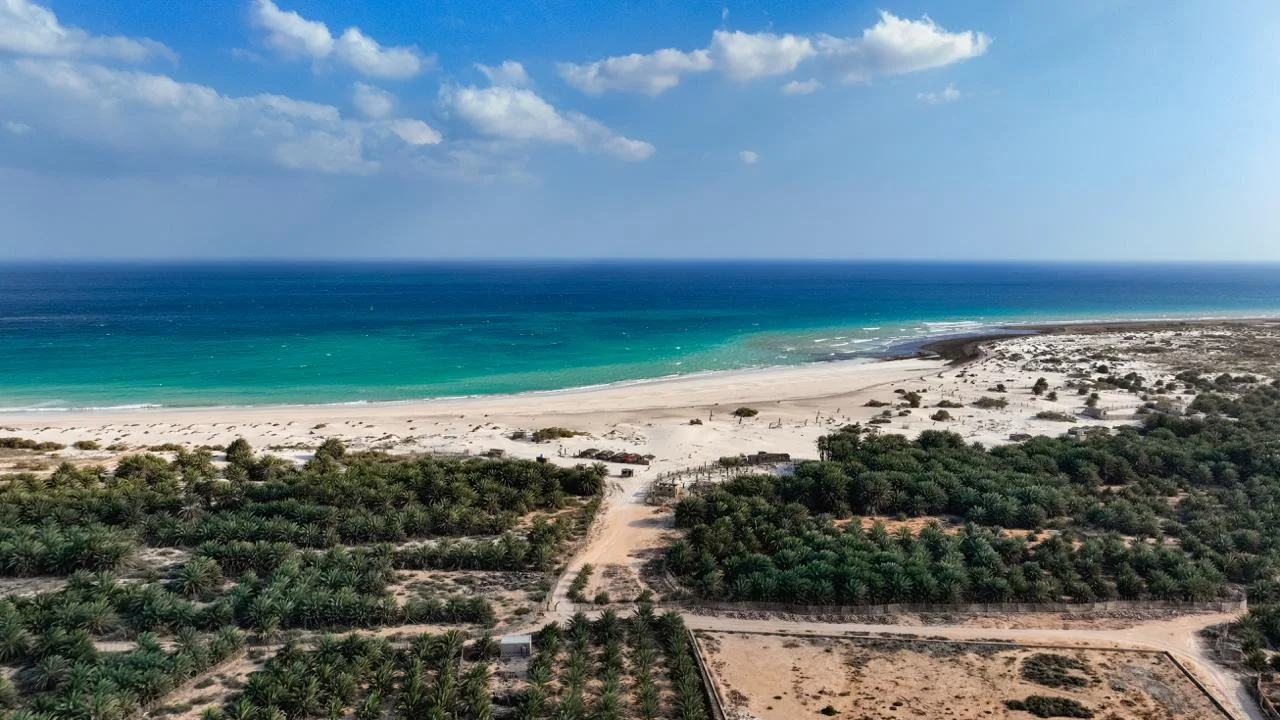

2026 guide — by the concierge team at The Landlord, on the ground in Tunisia since 2019. Djerba is not a single resort. The island breaks down into very different areas, from the bustling medina of Houmt Souk to the long beaches of the resort zone and the quiet inland villages. The right area depends entirely on the kind of trip you want. Here is how to choose, area by area.
Djerba in brief: understand the island before you book
Djerba is a 514 km² island, the largest in North Africa, inscribed as a UNESCO World Heritage Site in 2023. It is linked to the mainland by the Roman causeway at El Kantara (about 7 km toward Zarzis) and by a ferry from Ajim in the west. Most travellers arrive through Djerba-Zarzis International Airport (code DJE), on the western side near Mellita.
The island is flat and compact — you can cross it by car in roughly forty minutes. For anyone looking at a holiday rental, Djerba reads as five distinct areas:
- Houmt Souk — the capital and its shopping centre, in the north-west.
- The resort zone (Sidi Mahrez–Mezraya) — the beach-and-hotel strip on the north-east coast.
- Midoun — the second town, a balance between beach and island life.
- Aghir and the south-east coast — family beaches, more affordable hotels, water sports.
- Erriadh and the interior — villages, riads, street art and heritage.
| Area | Atmosphere | Best for | Car useful? |
|---|---|---|---|
| Houmt Souk | Authentic, lively, full of shops | Couples, solo travellers, culture trips | No in the centre, yes for beaches |
| Resort zone (Sidi Mahrez) | Classic beach holiday, equipped beaches | Families, one-to-two-week beach stays | Handy, not essential |
| Midoun | Island life plus beach, versatile | Families, travellers who want to see it all | Recommended |
| Aghir / south-east coast | Calm beaches, budget, sport | Families with young children, sporty travellers | Recommended |
| Erriadh / interior | Quiet, riads, art, heritage | Couples, heritage lovers, remote workers | Essential |
The Landlord tip. Your choice of area barely affects the airport transfer: no zone is more than 35-40 minutes’ drive from the airport. Don’t over-weight that factor. To set up your arrival, see our airport transfer service.
Houmt Souk: the capital, for authenticity
Houmt Souk is the beating heart of Djerba. This is where you find the medina — a maze of whitewashed lanes where potters, jewellers and weavers keep age-old crafts alive. Every morning the fish market comes to life at auction, and the old fishing harbour is watched over by Borj El Kebir, an old seafront fort. Cafés, fish restaurants and restored merchants’ inns are packed into a small, walkable area.
Who this area suits:
- Couples and solo travellers who want neighbourhood life, restaurants and shops on the doorstep.
- Culture-focused trips, where the beach is not the top priority.
- Those who prefer authenticity to a standardised beach-resort experience.
What to know: Houmt Souk is not on the beachfront — swimming means a car or taxi to the north-east coast. Accommodation is mostly renovated dars (traditional courtyard houses), charming guesthouses or smart apartments; large villas with a private pool are rare. Book inside the medina or on its edge and you keep the souks, harbour and evening restaurants within walking distance, with an ideal base for exploring the island. Our 5-day Djerba itinerary covers the medina, El Ghriba and the villages.
The resort zone (Sidi Mahrez–Mezraya): beaches and hotels
This is the Djerba most travellers picture: the resort zone rolls out several kilometres of fine sand on the north-east coast, between Houmt Souk and Midoun. Its core is Sidi Mahrez beach, one of the finest and best-equipped on the island — pale sand, shallow water, ideal for children learning to swim. The village of Mezraya rounds out the offer to the north, with its own beaches and good hotels.
Who this area suits:
- Families who want the beach within steps, with no planning.
- Relax-and-do-nothing stays of one to two weeks, built around the sea.
- Travellers who enjoy the buzz: camel rides, beachfront restaurants, resort life.
What to know: the zone is very lively in July and August, but loses much of its crowd in May-June and September — the most pleasant window. It is also spread out: a rental “in the resort zone” can be on the sand or a kilometre away. Always check the real distance to the beach before booking — it is the first thing our guests wish they had verified. For a family beach stay, add a private chef at your accommodation so you don’t have to head out again with tired children. See our apartments and villas in Djerba.
Midoun: the best balance of beach and island life
Midoun is the second-largest town in Djerba and one of its most dynamic. Its position — in the north-east, midway between Houmt Souk and Taguermess point — makes it a practical base for reaching every part of the island. Its weekly market is a well-known local fixture, and the Djerba Explore Park — museum, reconstructed traditional village and crocodile farm — draws families.
Who this area suits:
- Families who want both the beach and a real town with shops, a market and restaurants.
- Travellers who plan to move around a lot: El Ghriba, Houmt Souk and the south are all within easy reach.
- Those looking for a compromise between resort buzz and local life.
What to know: Midoun combines a busy town centre with easy access to Sidi Mahrez beach or to Seguia beach, one of the loveliest on the island. A car is recommended — it turns Midoun into an ideal pivot for exploring Djerba in every direction, from the potters’ village of Guellala in the south to the northern beaches. If you’d rather not drive, our guests often book a private driver by the day for these excursions.
Aghir and the south-east coast: families, budget and water sports
In the south-east, Aghir stretches out a long, uncrowded beach with calm, shallow water. This is the area for families with young children and budget-conscious travellers: its 3- and 4-star hotels are noticeably cheaper than the big resorts on the northern coast. It is also the best address for water sports — kayaking, paddleboarding, windsurfing — with bases that rent equipment by the day.
Who this area suits:
- Families with young children: a gently shelving beach, calm water, a quiet atmosphere.
- Travellers who want to keep their budget in check without giving up the sea.
- Sporty travellers and water-sports enthusiasts.
What to know: the south-east coast is calmer and more open than the northern resort zone, but the choice of nearby restaurants and shops is more limited — a car is recommended for groceries and outings. That very quietness is what appeals to families looking for rest. To pinpoint the island’s best swimming spots, see our guide to the best beaches in Djerba.
Erriadh and the interior: riads, street art and heritage
About ten kilometres south of Houmt Souk, Erriadh — the old village of Hara Sghira — is a category of its own. This is where you find the El Ghriba synagogue, the oldest in North Africa, in continuous use for nearly 2,000 years and the site of an annual pilgrimage. A short walk away, the Djerbahood project has turned the village’s white walls into an open-air art gallery: launched in 2014, it now gathers around 250 murals by artists from some thirty countries.
Who this area suits:
- Couples and heritage lovers who want to stay away from the beach bustle.
- Those after a boutique-hotel feel: renovated riads and traditional dars, calm and character.
- Remote work and longer, quieter stays.
What to know: the island’s interior has no beach. A car is essential here to reach the sea, restaurants and shops. In return you get a more authentic, more peaceful Djerba — and often gentler prices per square metre than on the seafront.
According to the UNESCO World Heritage Centre, Djerba bears witness to a distinctive “settlement pattern” that took shape around the 9th century CE, shaped by water scarcity and housing scattered across small hamlets. Staying in the interior means discovering exactly that Djerba — the one of the houch, the courtyard houses, and the mosques of the Ibadi school of Islam.
Which area suits your travel style?
| Your profile | Recommended area | Why |
|---|---|---|
| Couple, culture trip, beach not a priority | Houmt Souk or Erriadh | Medina, souks, heritage and restaurants on the doorstep |
| Family with young children, beach first | Aghir / south-east coast | Gently shelving beach, calm water, gentler prices |
| Family or group, relax-and-do-nothing stay | Resort zone (Sidi Mahrez) | Finest equipped beaches, everything within steps |
| Travellers who want to see it all | Midoun | Central position, ideal exploring base |
| Quiet, remote work, long stay | Erriadh / interior | Peaceful riads, authentic feel, gentler prices |
| Sporty travellers, water sports | Aghir | Kayak, paddle and windsurf bases |
None of these areas should be “avoided”. Djerba is one of the safest destinations in Tunisia — being an island makes it easier to monitor — and there is no zone closed to visitors. The real question is not safety but the match between the area and the way you travel. For the wider picture, see our article on whether Tunisia is safe for tourists.
How much a rental costs by area
The ranges below are indicative for 2026, per night, for a whole-property rental, in Tunisian dinars (TND). The lower figure reflects low season (November to March), the upper figure the July-August peak.
| Area | 2-bedroom apartment / dar | 3-4-bedroom villa with pool |
|---|---|---|
| Houmt Souk | 180 – 400 TND | Limited choice (320 – 650 TND) |
| Resort zone (Sidi Mahrez) | 250 – 500 TND | 600 – 1,400 TND |
| Midoun | 220 – 460 TND | 500 – 1,200 TND |
| Aghir / south-east coast | 200 – 430 TND | 480 – 1,100 TND |
| Erriadh / interior | 200 – 420 TND | 450 – 1,000 TND |
Three factors move the price far more than the area itself: the real distance to the beach, the presence of a private pool, and the season (the same property can almost double between February and August). Always ask for the exact distance to the sea and a season-by-season breakdown before you book.
When to visit Djerba
Djerba is pleasant from March to October. The area you choose doesn’t change the climate, but it changes the experience by season: the resort zone in August is nothing like the same zone in May.
| Season | Strengths | Watch points |
|---|---|---|
| March-April | Mild climate (22-27 °C), low prices, quiet island — ideal for heritage | Sea still cool for swimming |
| May-June | Ideal weather, warming sea, moderate crowds | Book early — June fills up fast |
| July-August | Everything open, sea around 27 °C, resort life at its peak | Heat (30-33 °C), highest prices, busy |
| September | Sea still warm, thinning crowds, beautiful light | Some seasonal closures late in the month |
| October | Pleasant climate, gentle prices, peaceful island | Cooler evenings, sea cooling down |
| November-February | Total calm, lowest prices | Off-season for swimming, some shops closed |
The best compromise: May-June or September — pleasant sea, reasonable prices, manageable crowds. For a purely cultural trip, spring (March-April) is unbeatable.
Getting around Djerba: do you need a car?
This often decides the choice of area. Djerba is flat and compact, but its sights are scattered and public transport stays limited. In Houmt Souk and the resort zone, you can manage without a car by relying on taxis; in Midoun, Aghir and the interior, a car is recommended — sometimes essential — to reach the beach, shops and sights. If you’d rather not drive, a private driver on demand covers excursions without the stress of the road.
FAQ — Where to stay in Djerba
What is the best area for a first stay in Djerba?
The Sidi Mahrez resort zone if your priority is the beach and simplicity — everything is within steps. Houmt Souk if you want to feel the island’s character first — medina, souks, fish restaurants — even if it means a taxi to go swimming.
Houmt Souk or the resort zone: which should I pick?
Houmt Souk is authentic and lively, but with no beach at your door. The resort zone offers the finest equipped beaches and direct access to the sand. Many guests combine the two: a few nights in each to vary the mood.
Do I need a car to stay in Djerba?
It depends on the area. In Houmt Souk and the resort zone you can manage with taxis. In Midoun, Aghir and the interior a car is recommended, sometimes essential — or a private driver on demand.
Which area is best for a family holiday with children?
The Sidi Mahrez resort zone for the best-equipped beach within steps. Aghir and the south-east coast for a calmer, gently shelving beach and gentler prices — an excellent choice with young children.
Where should I stay in Djerba for a cultural trip?
Erriadh and the island interior: a riad or traditional dar, a short walk from the El Ghriba synagogue and the Djerbahood murals. Houmt Souk is the urban alternative, with the medina and souks on your doorstep.
Can I stay in Djerba out of season?
Yes — a fine idea for a quiet, low-cost stay. From November to March prices drop to their lowest and the island is peaceful. Swimming is off-season, but the mild climate suits heritage sightseeing and remote work in the sun.
Where to book: The Landlord’s recommendation
The right area depends on your trip, not on a universal ranking. For a cultural stay, aim for Houmt Souk or Erriadh. For a family beach holiday, the resort zone or Aghir. To see it all, Midoun. For quiet and heritage, the island interior. Our rentals in Djerba cover these different areas — each one checked before you arrive, with an on-site welcome and 7-day concierge support.
See our available rentals in Djerba →
Torn between two areas? Our team replies quickly and will steer you according to your group and dates: contact@thelandlord.tn or +216 58 59 59 00. Our concierge service then takes over on the ground — transfers, groceries, private chef, excursions.
Applying the same method to another destination? Our guide on where to stay in Hammamet breaks down the neighbourhoods of the Cap Bon east coast along the same lines.
Written by the TLL Travel team — concierges in Tunisia, managing 120+ premium rentals since 2019.