

Ten days is enough to see all of Tunisia without rushing: Tunis, Carthage and Sidi Bou Said, the Roman city of Dougga, Sousse and El Jem, Kairouan, the oases of Tozeur, the dunes of Douz, the Ksar Ghilane oasis, the Berber granaries around Tataouine, and two days on Djerba before your flight home. Expect around 1,500 km of driving (the sum of the stages below) at a pace that leaves room to stop: three heavier days, on Days 2, 5 and 9, and lighter days in between.
Ten days changes the nature of the trip: shorter drives, a real night in the desert, the far south that most tours skip, and an ending on the beach instead of the motorway. This is the version we recommend to travellers who want to see Tunisia, not just cross it.
The route at a glance
| Day | Stage | Driving (approx.) | Overnight |
|---|---|---|---|
| 1 | Tunis, Carthage, Sidi Bou Said | local | La Marsa / Sidi Bou Said |
| 2 | Dougga → Hammamet | about 110-125 km (1 h 40) + about 145 km (2 h 30) | Hammamet |
| 3 | Hammamet → Sousse | about 85 km (a little over an hour) | Sousse |
| 4 | Sousse → El Jem → Kairouan | about 65 km (1 h) + 65-75 km (about 1 h) | Kairouan |
| 5 | Kairouan → Tozeur | about 290-300 km (4 h 20 to 4 h 30) | Tozeur |
| 6 | Mountain oases (Chebika, Tamerza, Mides) | about 120-155 km round trip, paved roads | Tozeur |
| 7 | Chott el Jerid → Douz | about 120-130 km (about 2 h) | Douz (desert camp) |
| 8 | Douz → Ksar Ghilane | about 2 to 2.5 h driving, 4×4 advised on the last part | Ksar Ghilane (camp) |
| 9 | Ksar Ghilane → Chenini → Ksar Ouled Soltane → Djerba | about 5 h of driving in total, visits excluded | Djerba |
| 10 | Djerba: Houmt Souk, Erriadh, Guellala → flight | on the island | — |
Distances and times are orders of magnitude drawn from several road sources; they vary with traffic, roadworks and the route your driver picks.
The route runs north to south-east with no backtracking: fly into Tunis-Carthage, fly out of Djerba-Zarzis. If your return flight leaves from Tunis, you have two options: an extra driving day (about 530 km, 6.5 to 7.5 hours at the wheel) or a domestic flight from Djerba, about an hour.
Day 1: Tunis, Carthage and Sidi Bou Said
No long drive today. In the morning, the Medina of Tunis, a UNESCO site since 1979: covered souks, palaces turned museums. The Zitouna mosque is seen from outside and through its courtyard: the prayer hall is reserved for Muslims, and visiting hours depend on prayer times. In the afternoon, Carthage (also UNESCO, 1979): the Antonine Baths (open roughly 8:30am to 5pm in winter and 8am to 6pm in summer), Byrsa Hill and the Punic ports. Our Carthage ruins guide has the details.
End the day in Sidi Bou Said for sunset over the gulf, then sleep in La Marsa or in one of our Sidi Bou Said rentals, close to the airport: the ideal base to recover from the flight. More on the village in things to see in Sidi Bou Said.
Day 2: Dougga, North Africa’s best-preserved Roman town
A full day: about 1 h 40 from Tunis to Dougga, UNESCO-listed since 1997, then about 2 h 30 on to Hammamet. The site is open all week, from 8:30am in winter and 8am in summer (closing around 5:30pm in winter, 7pm in summer): leave Tunis early to arrive at opening time.
Dougga is an entire Roman town on a hillside among olive groves: Capitol, a theatre of about 3,500 seats, temples, baths, paved streets and a Libyco-Punic mausoleum about 20 metres high. There is little shade, so early morning and late afternoon are the best moments. Allow at least 3 hours.
In the afternoon, drive on to Hammamet for the night and walk the medina and the seafront kasbah in the evening. Ideas in our Hammamet guide.
Day 3: Hammamet, then Sousse
A free morning in Hammamet: beach, hammam, or simply a slow breakfast after two full days. That’s the point of the longer trip. To stay longer, our Hammamet holiday rentals slot in easily before or after the tour.
Leave early afternoon for Sousse (about 85 km, a little over an hour). The Medina of Sousse (UNESCO 1988) is best in the late afternoon: the ribat, the Great Mosque, the souks. The ribat closes around 5:30pm in winter and 7pm in summer, so in low season visit it first. See things to do in Sousse.
Day 4: El Jem and Kairouan
Leave Sousse around 8am: the Great Mosque of Kairouan closes at 2pm (and at noon on Fridays), and that sets the rhythm of the day.
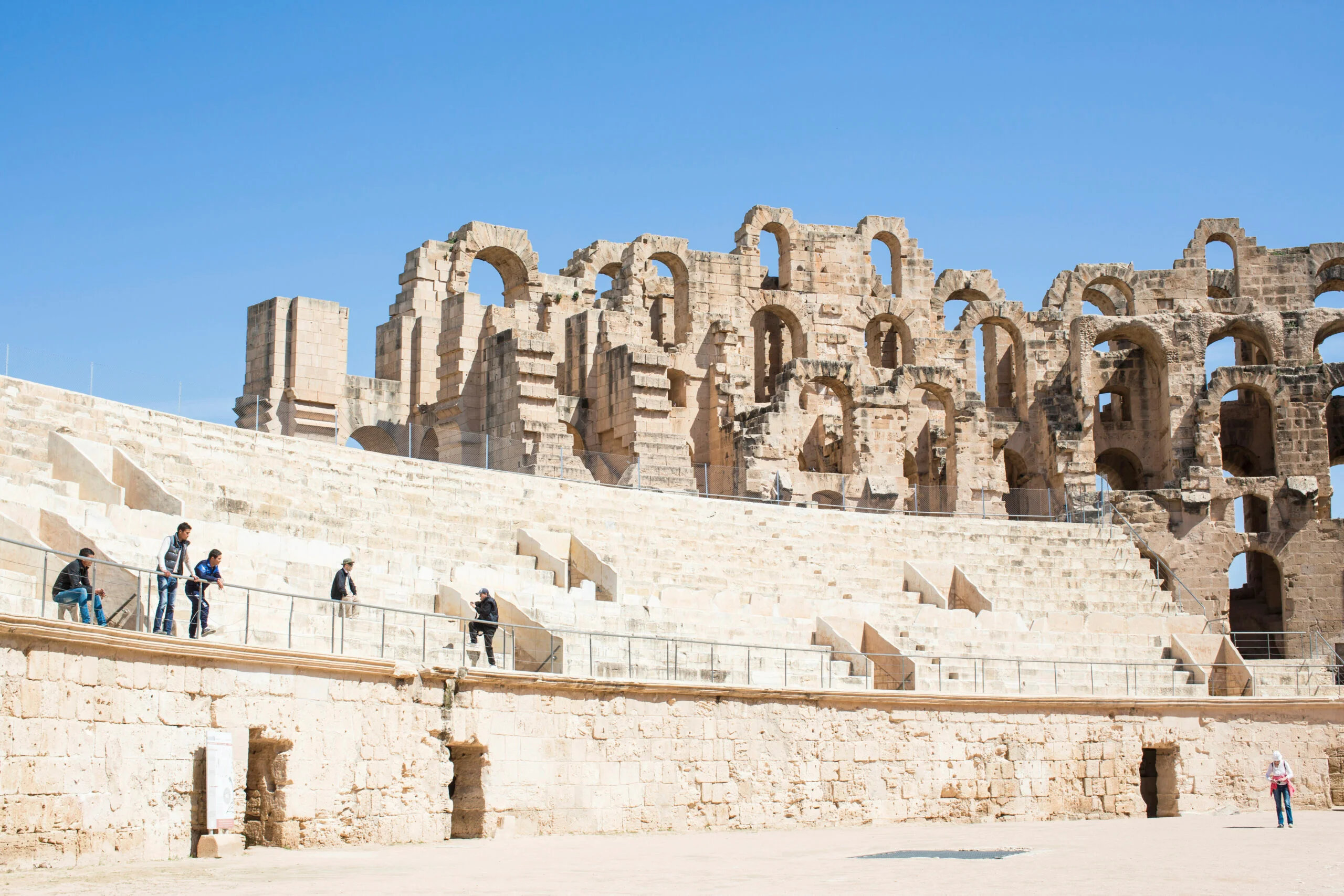
Morning at the El Jem amphitheatre (UNESCO 1979), about 65 km from Sousse and one of the largest in the Roman world: sources give between 27,000 and 35,000 spectators depending on the estimate. It opens around 7 to 7:30am and closes between 5pm and 6:30pm depending on the season. You can walk the underground galleries, reached by staircases, where animals and gladiators waited.
Late morning, drive to Kairouan (UNESCO 1988), 65 to 75 km further: a holy city founded in 670. The Great Mosque can be visited until 2pm, with shoulders and knees covered; the prayer hall is reserved for worshippers, but you can see inside from the courtyard. In the afternoon, the Aghlabid basins, the walled medina and its carpet workshops. Overnight here to break the drive south.
Day 5: Kairouan to Tozeur
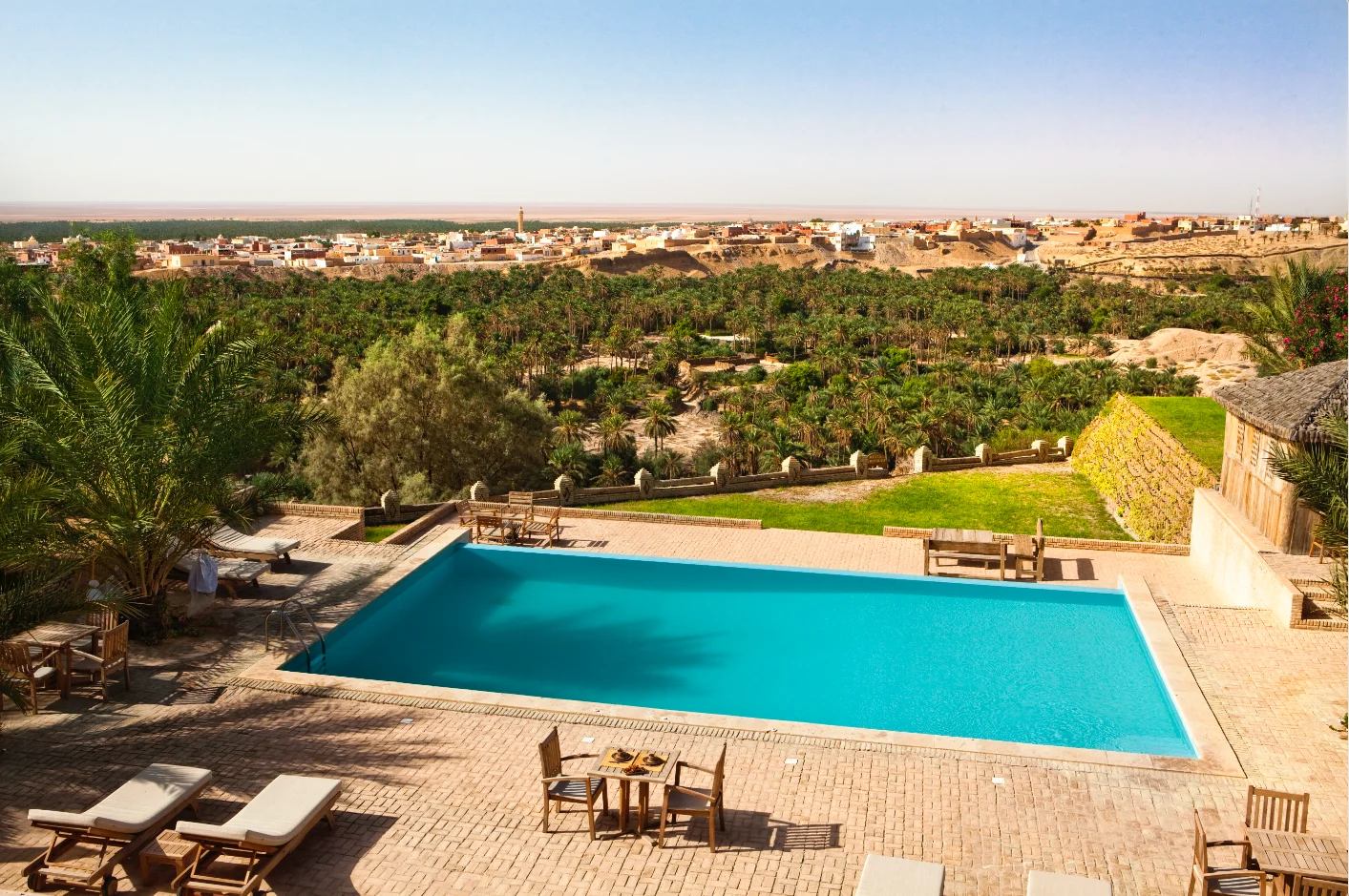
The longest leg, around 290 to 300 km and 4 h 20 to 4 h 30 at the wheel. Leave early and let your driver choose the road: several routes link Kairouan and Tozeur, and some cross Kasserine governorate (Sbeitla), which the British and Canadian official advice discourages (see the safety section below). The road crosses the central steppe before reaching the Jerid. Tozeur’s palm grove holds hundreds of thousands of date palms, and the old Ouled el Hadef quarter is lined with yellow brickwork façades in geometric patterns. We also have rentals in Tozeur if you prefer a house to a hotel.
Day 6: the mountain oases
A loop to Chebika (about 55 km from Tozeur), Tamerza (about 90 km) and Mides (about 95 km) near the Algerian border: canyons, a waterfall, abandoned villages. Allow 120 to 155 km round trip. The roads are paved all the way to the three villages, so an ordinary car is enough; a 4×4 is mainly useful on canyon tracks and, for film fans, at Ong Jemel, a Star Wars set near Tozeur with a sandy approach. Don’t count on the Tamerza waterfall in summer: it can shrink to a trickle. Bring water, a hat, small dinar notes (no cash machines there) and your ID: security checkpoints are possible on this road. Go with a driver who knows the area, through our car with driver service. Back to Tozeur for the night.
Day 7: Chott el Jerid and Douz
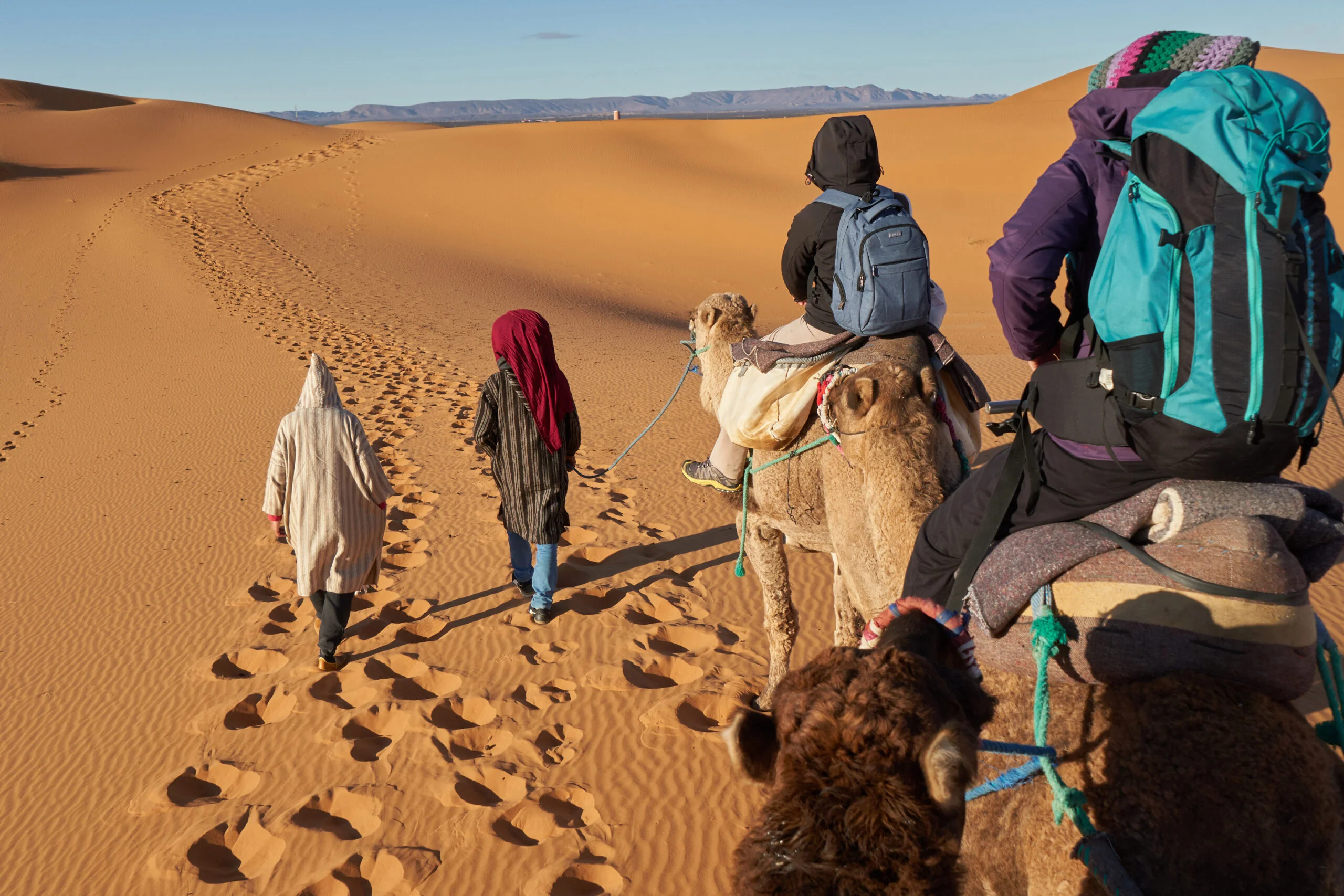
Cross the Chott el Jerid, the largest salt pan of the Sahara, on the causeway road between Tozeur and Kebili. In summer it is almost completely dry and mirages are frequent; some Star Wars scenes were filmed here. Arrive in Douz, the “gateway to the Sahara”, about 120 to 130 km from Tozeur, for a camel ride at sunset and your first night in a desert camp.
Day 8: Ksar Ghilane, the oasis at the end of the road
The heart of the 10-day route. Ksar Ghilane is a remote oasis on the edge of the Grand Erg Oriental, with a natural hot spring (around 35 °C, open all year) you can bathe in among the palms, and the Roman fort of Tisavar, from the reign of Emperor Commodus, nearby in the dunes.
Allow about 2 to 2.5 hours from Douz. Sources describe a paved road almost all the way to the oasis, then a sandy stretch to the camps and sites: a 4×4 is not always needed on the tarmac, but several guides consider it essential as soon as you leave the asphalt, with a driver who knows the area or in convoy. Distances quoted for this leg range from 80 to 145 km depending on the source, so we don’t put a figure on it. Sand conditions change with the wind: the main reason to take a 4×4 with a driver for this day. A second night in camp, much quieter than Douz. The desert is very hot in summer and winter nights are cold: the most comfortable period runs from October to April.
Day 9: the Tataouine ksour, then Djerba
The longest day after Day 5: about 107 km (around 2 hours) from Ksar Ghilane to Tataouine, then, once the visits are done, about 120 to 140 km (around 2 hours) from Tataouine to Djerba. The way out of Ksar Ghilane (tracks or a longer road detour) depends on ground conditions and the previous days’ weather: your driver decides that morning.
Head up into the Dahar hills and their Berber villages. Chenini, half an hour from Tataouine, is a fortified village on a ridge, with rock-cut dwellings and the Seven Sleepers mosque. Then Ksar Ouled Soltane, about 40 minutes from Chenini: a ksar whose two courtyards are lined with multi-storey vaulted ghorfas, former communal granaries, used as the slave quarters of Mos Espa in Star Wars: The Phantom Menace. A private guide makes these stops far more meaningful.
Late afternoon, drive to Djerba. Two options: the Roman causeway at El Kantara (about 7 km, route 117 via Medenine and Zarzis), which regional authorities recommend to avoid queues, or the Jorf–Ajim ferry, where the wait can run from 30 minutes to 3 hours in high season. Overnight on the island, finally by the sea.
Day 10: Djerba before your flight
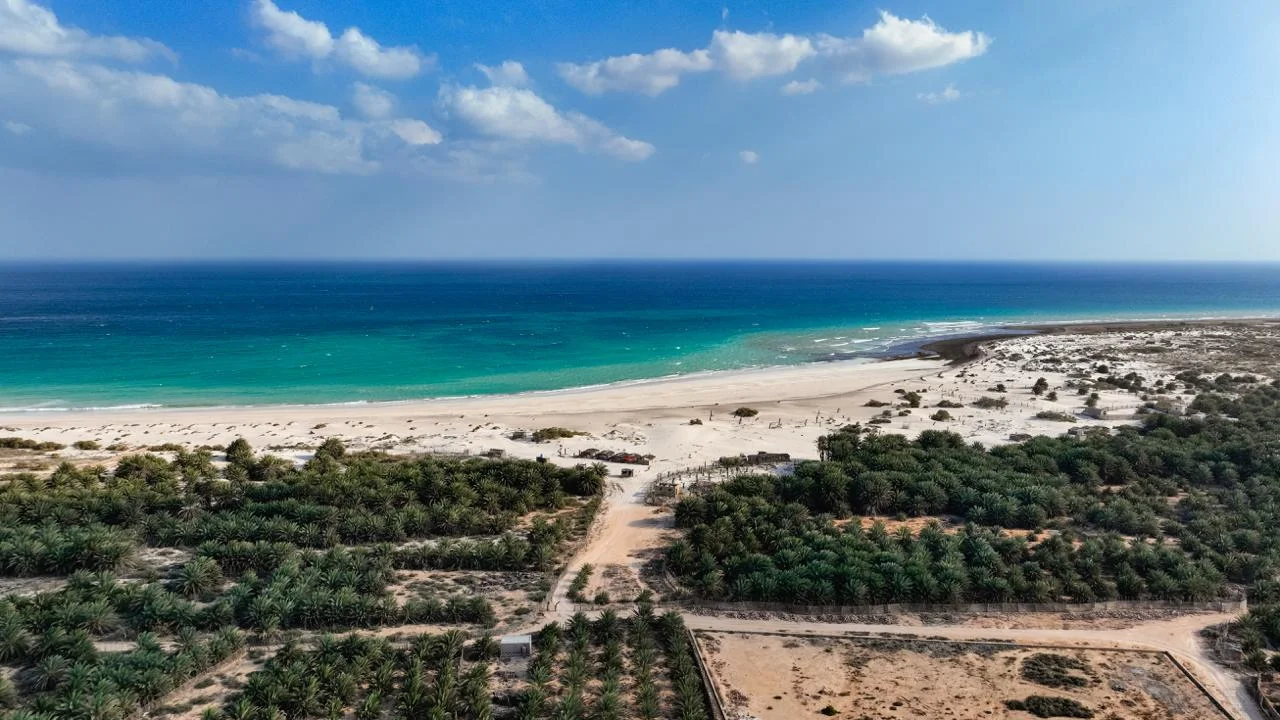
Djerba has been on the UNESCO World Heritage List since 2023, recognised for its island settlement pattern. In the morning: Houmt Souk and its souks, the open-air murals of Erriadh (see our Djerbahood guide), and the potters of Guellala, several of whose workshops welcome visitors.
The Ghriba synagogue, about 7 km from Houmt Souk, can be visited: sources agree on morning slots (around 9am to noon) and late-afternoon slots (3 or 3:30pm to 5pm), closed on Saturdays and major Jewish holidays. Since the 2023 attack, security has been tightened: bag checks, police presence, shoulders and knees covered, heads covered for men, shoes off in the main hall. The annual pilgrimage ran from 30 April to 6 May 2026, with foreign visitors gradually returning. One visitor reported an early closure in June 2026: don’t schedule the Ghriba at the last minute before your flight, and have our concierge confirm that it is open on the day. Allow 15 to 30 minutes there.
Fly home from Djerba-Zarzis. Staying on? Our Djerba rentals and 5-day Djerba itinerary take over.
Site opening hours: official benchmarks
Hours from the Tunisian heritage agency, indicative only: they differ between winter and summer (the changeover dates are not stated) and are reduced during Ramadan (about 7 February to 8 March in 2027, depending on the moon). We reconfirm them for you before departure.
| Site | Winter | Summer | Note |
|---|---|---|---|
| Dougga | 8:30am – 5:30pm | 8am – 7pm | open all week |
| El Jem amphitheatre | about 7:30am – 5pm | about 7am – 6:30pm | two sources, half an hour apart |
| Antonine Baths (Carthage) | 8:30am – 5pm | 8am – 6pm | |
| Great Mosque of Kairouan | 8am – 2pm | 7:30am – 2pm | Fridays: closes at noon |
| Ribat of Sousse | 8am – 5:30pm | 8am – 7pm | open all week |
| Ghriba (Djerba) | about 9am – noon and 3pm – 5pm | same | closed Saturdays, confirm on the day |
We don’t quote entry fees: they differ from one source to another and tend to change.
Car, budget, pace: the practical side
| Question | Our answer |
|---|---|
| Sedan or 4×4? | A sedan works as far as Tozeur and for the mountain villages (paved roads); 4×4 advised from Douz onward, especially for Ksar Ghilane and the tracks |
| Self-drive? | Fine in the north; in the south a driver saves time and adds safety (avoid night driving, tracks change, plan fuel away from towns) |
| Hours of driving per day? | 1 to 3 on lighter days; 4 to 5 on Days 2, 5 and 9 |
| Budget | Depends on vehicle, accommodation level and season: tailored quote |
| Flights | Into Tunis-Carthage, out of Djerba-Zarzis (open-jaw ticket) |
Think of the budget line by line: vehicle and driver, nights (two in desert camps), site entries, guide, fuel. We don’t publish a flat price because it varies too much with group size and dates. Our concierge team will send a detailed quote.
Safety: the official advice to know
The classic route is followed by many travellers, but government advisories are not all identical, and it is worth reading them before booking (consulted in November 2026). The UK advises against all but essential travel in Kasserine governorate (Sbeitla included); Canada advises against all travel there. Canada lists Chebika, Mides and Tamerza as exceptions within the Algerian border zone, where extra caution applies; the older US advisory (October 2024) advises against the 16 km band along that border and exempts only Tabarka and Ain Draham. All of them advise against the military zone south of Remada, which requires authorisation, and the Libyan border areas; none names Ksar Ghilane or Chenini. The UK also notes that night driving is hazardous outside towns and that you should check fuel before long, remote journeys. Stick to agreed routes, carry your ID and don’t photograph military sites. Our Tunisia safety guide gives the wider picture.
When to go
The best windows are March to May and October-November. Spring is mild rather than hot; for the desert the comfortable period runs from October to April, with March-April the most pleasant. In summer the desert often passes 40 °C, so the route works only with early starts and late-afternoon visits. In December-January days are mild but Sahara nights can drop close to freezing: pack a proper fleece, and book desert camps several weeks ahead, since it is a busy period. Sea swimming on Djerba is possible into October or so.
The Landlord services along your route
Over ten days, logistics make the difference: ten nights, two desert camps, one arrival airport and another for departure. Based in La Marsa since 2019, we handle it end to end through our concierge team:
- Airport transfer on arrival at Tunis-Carthage and departure from Djerba-Zarzis: see our airport transfer service.
- Car with driver or 4×4 for the long stages and the desert: car hire with chauffeur.
- Private excursions and a French-speaking guide: private excursions in Tunisia and private guide, including a private excursion from Tunis, Sousse, Hammamet or Djerba for rest days between stages.
- Private chef at your accommodation for a dinner after a long drive: private chef in Tunisia.
- At-home massage, romantic welcome (flowers, candles, decoration) and padel initiation or private fitness coaching, as extras, through the concierge.
Our concierge services are offered in the cities where we operate, Tunis, Sousse, Hammamet and Djerba, which means at the start, middle and end of your route; the desert stages are booked with our help, on quote. All prices are provided on quote. To request everything in one place, download The Landlord app (iOS · Android).
FAQ
Is 10 days enough to see Tunisia?
Yes. Ten days covers the north, the centre, the desert and Djerba, with heavier driving days on Days 2, 5 and 9. Beyond that, you mostly add beach time or the north-west (Tabarka, Ain Draham).
Do I need a 4×4?
Not for most of the route: roads are paved to Tozeur, the mountain oases and, according to most recent sources, as far as Ksar Ghilane. However, several guides consider a 4×4 with driver essential as soon as you leave the tarmac around Ksar Ghilane. The simplest option is a 4×4 with driver for Days 7 to 9.
Is the Ghriba synagogue open to visitors?
Yes, in principle in the morning and late afternoon, except Saturdays and major Jewish holidays, with security checks and covered clothing. Hours can change: our concierge confirms it is open on the day.
Can I arrange a private chef, a massage or a padel initiation during the trip?
Yes, in the cities where we operate (Tunis, Sousse, Hammamet, Djerba), for example a private chef dinner at your Hammamet or Djerba accommodation, or a padel initiation during the free morning of Day 3. Prices on quote, via the concierge or The Landlord app.
Can I do this route with children?
Yes, at the pace suggested. Desert camps and camel rides are usually the highlight for kids. Avoid summer in the south.
Should I book desert camps in advance?
In peak periods (spring, school holidays, December-January), yes: book several weeks ahead.
Can I do it in reverse?
Yes: fly into Djerba, out of Tunis. Starting in the south lets you enjoy the desert before the heat builds, from spring onward.
In short
A 10-day Tunisia itinerary is the format that lets you see everything without wearing yourself out: seven UNESCO sites (Tunis, Carthage, Dougga, Sousse, El Jem, Kairouan and Djerba), two nights in the desert, the far-south ksour and a final day on Djerba. The rest is logistics: airport transfer, driver, private excursions, private chef and desert camps. Send us your dates and group size, and our concierge team will build the route and take care of the rest, or find all our services in The Landlord app.